Josef Svoboda: Diapolykran The Creation of the World Expo67

Josef Svoboda: Diapolykran The Creation of the World Expo67

Svoboda was a brilliant scenographic artist and stage designer. He founded the Laterna Magicka group and the Diapolyekran (multi-screen array) was invented for the Brussels World Fair of 1958, and had a major impact at the Canadian Expo67 in Montreal.
“Polyekran offers the possibility of free composition, a free shaping and creation on several screens. Images of real objects and people are projected, but the relationships among them are not realistic, but rather supra-realistic, perhaps surrealistic. Essentially, it’s the principle of abstract and pure collage, which is an old and basic technique of theatre. “Op art” is perhaps simply a more recent name for it. In any case, the contrast of varied things on stage is basic to theatre; the objects thereby acquire new relationships and significance, a new and different reality.”
In comparison with Polyekran, which is totally a film spectacle and technically a concern of film, Laterna Magika is theatre with living actors, singers, dancers, musicians. . . . On the one hand we used familiar scenographic techniques such as slides and film projection. New expressive possibilities were added by panoramic film and projection with multi-exposure on several screens at once. A second feature is the use of mobile screens that are joined to the performance of a live actor.
(Svoboda, quoted in “O svetelnem divadle,” Informacni Zpravy Scenograficke Laboratore (Sept. 1958), P. 5.)
http://monoskop.org/Josef_Svoboda
Robert Fuest: The Final Programme 1968

Robert Fuest: The Final Programme 1968

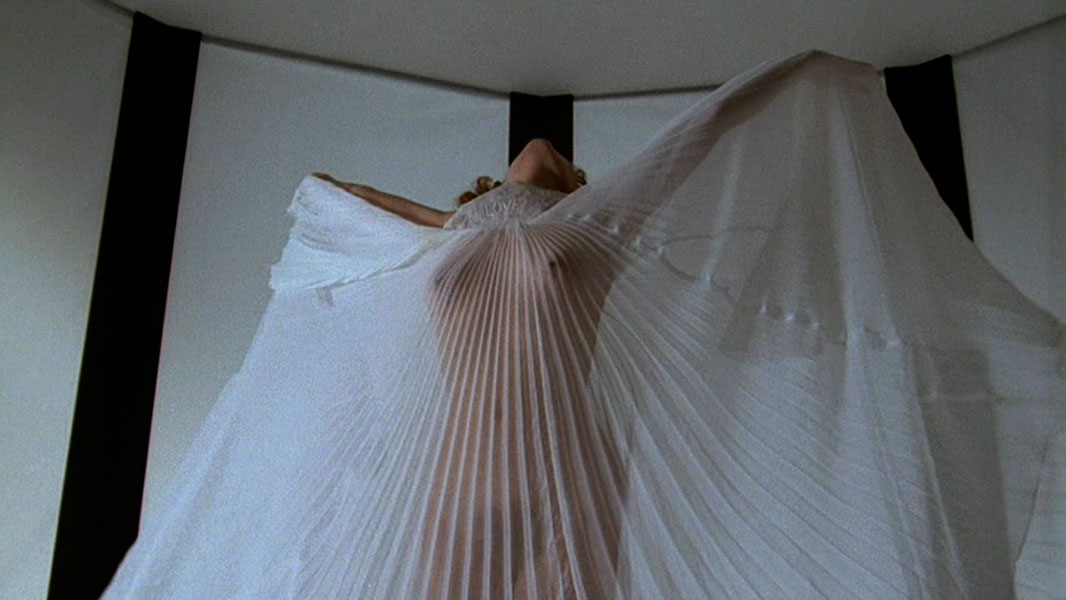
Of all the stylistically exaggerated Sixties movies (including Losey’s delicious Modesty Blaise) it is Robert Fuest’s The Final Programme that does it for me. Written by Michael Moorcock, Notting Hill Gate’s omnipresent sci-fi author and eccentric, it stars Jon Finch as Jerry Cornelius, Jenny Runacre as Miss Brunner, and a phenomenal cast of the best of British at that time. The film is an example of how the underground – the counter-culture in which Moorcock played a leading role – inspired mass entertainment. Other movies around this time that transmuted sci-fi and comic-book characters to the big screen included Vadim’s Barbarella, Losey’s Modesty Blaise, Michael Elliot’s The Year of the Sex Olympics and McGoohan’s The Prisoner (both for TV).

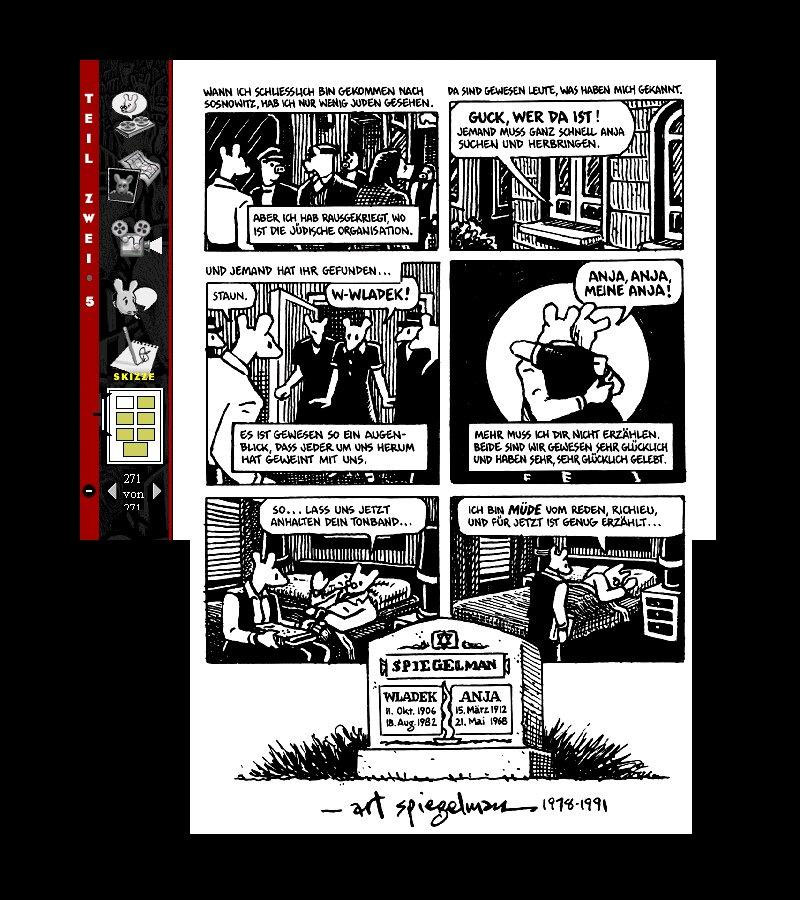
Art Speigelman: Maus – a Voyager Expanded Book on CDROM 1994

Art Speigelman: Maus - a Voyager Expanded Book on CDROM 1994

Twenty years before Scott McCloud’s brilliant insight into digital comics, Reinventing Comics, Bob and Aileen Stein’s The Voyager Company began to explore the territory of ‘interactive comics’ – migrating the page to the screen and using the hypermedia tool Hypercard to add features such as hyperlinked context, interviews, video, indicing, bookmarks and other features entirely new to the general public in 1994 – a couple of years before these became part of the expectation of the media experience after the Web. The best of the current ibook tools (such as Apple’s iBook Author) are only just starting to catch up (in form, and in content-design tools) with what the Voyager creative team did 20 years ago.

Peter Behrens: AEG corporate identity 1906

Peter Behrens: AEG corporate identity 1906

In 1906 the industrial designer Peter Behrens was asked to redesign the publicity material for AEG, the giant German electricity supplier – a major national combine incorporating power supply and electrical products. Behrens implemented what was probably the first ‘corporate identity’ programme – the implementation of standardised brand imagery throughout both the AEG product line and all its publicity.

Lotte Reiniger: The Adventures of Prince Achmed 1926

Lotte Reiniger: The Adventures of Prince Achmed 1926

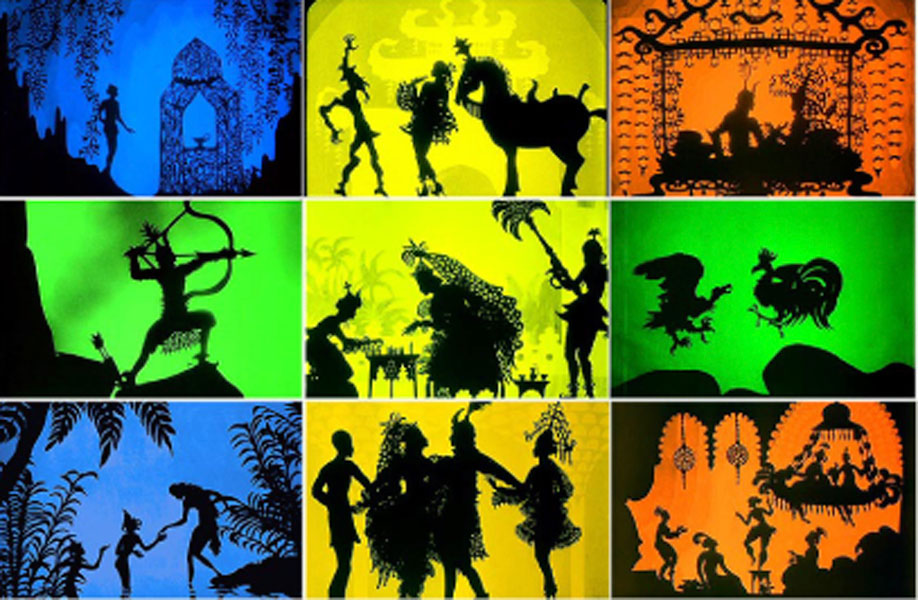
Lottie Reiniger developed her cut-out silhouette animation technique in 1919, and in partnership with her cinematographer and producer husband Carl Koch, from 1923 made one of the first feature-length animations: The Adventures of Prince Achmed, which still stands as a landmark in animation history. While clearly a development of 18th century silhouette portraiture and the 19th century cardboard children’s toy theatre shows, it is the astonishing handicraft of her animation technique, and her visual storytelling, that make her work very special.


← Back

Thank you for your response. ✨

Warning
Warning
Warning
Warning
Warning

Warning.

Zbigniew Rybczinkski: Tango 1980

Zbigniew Rybczinkski: Tango 1980

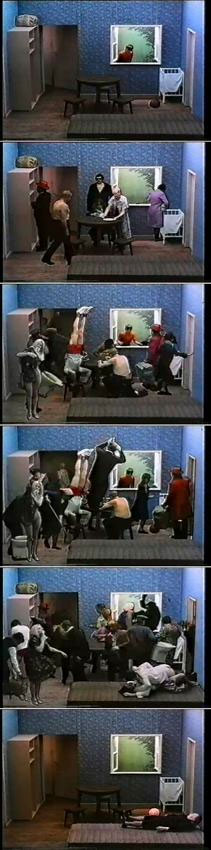
“Thirty-six characters from different stages of life – representations of different times – interact in one room, moving in loops, observed by a static camera. I had to draw and paint about 16.000 cell-mattes, and make several hundred thousand exposures on an optical printer. It took a full seven months, sixteen hours per day, to make the piece. The miracle is that the negative got through the process with only minor damage, and I made less than one hundred mathematical mistakes out of several hundred thousand possibilities. In the final result, there are plenty of flaws ® black lines are visible around humans, jitters caused by the instability of film material resulting from film perforation and elasticity of celluloid, changes of colour caused by the fluctuation in colour temperature of the projector bulb and, inevitably, dirt, grain and scratches.”

– Zbig Rybczynski –Looking to the Future – Imagining the Truth,” in Francois Penz, Maureen Thomas, Cinema& Architecture. Mliús, Mallet-Stevens,

David Hockney: 18-screen Wolds 2011

David Hockney: 18-screen Wolds 2011

Hockney has always explored new media, experimenting with imaging technologies like the Quantel Paintbox in the 1980s, the i-phone and i-pad drawing and painting apps (e.g. Brushes) more recently. He is also fascinated by Cubism, and has explored some of the ways in which artist’s represent the third dimension using optical tools, like mirrors, camera obscure and camera lucida. The multi-screen videos were made in the Yorkshire Wolds, the subject of many paintings, iPad drawings and video for his grand retrospective ‘A Bigger Picture’ at the Royal Academy in 2012.


← Back

Thank you for your response. ✨

Warning
Warning
Warning
Warning
Warning

Warning.

Tom McGrath, John (Hoppy) Hopkins, Allen Ginsberg etc: The International Poetry Reincarnation, Albert Hall, 1965

Tom McGrath, John (Hoppy) Hopkins, Allen Ginsberg etc: The International Poetry Reincarnation, Albert Hall, 1965

Allen Ginsberg reading Howl at the Royal Albert Hall, 1965. Though my favourite moments were when Harry Fainlight used a bow and arrow to loose his poem into the audience, and when the lady cinematographer was whirling her 16mm Bolex around her head, capturing zip panoramas of the oval interior of the Hall.
This was my first personal experience of the American/British/European ‘intermedia’ scene. It was part poetry reading, part party, part happening, and it presaged the whole Hippy thing (flowers given away outside Albert Hall). It decided me on the audio-visual ‘gesampkunstwerk’ route that became the central theme of my Diploma (DipAD) essay the following year.

← Back

Thank you for your response. ✨

Warning
Warning
Warning
Warning
Warning

Warning.

Jonas Mekas/The Living Theatre: The Brig 1964

Jonas Mekas/The Living Theatre: The Brig 1964

The Brig is a play written by former U.S. Marine Kenneth H. Brown (born 1936). It was first performed in New York by The Living Theatre on 13 May 1963 [1] with a production of it filmed in 1964 by Jonas Mekas. It has been revived in New York in 2007. It received an Obie Award.
The play depicts a typical day in a United States Marine Corps military prison called The Brig. Brown spent thirty days in a Brig for being Absent Without Official Leave whilst he was with the Third Marines in Camp Fuji Japan in the 1950s.” (wikipedia)

I saw this film in an all-night session on experimental ‘underground’ film at the BFI in the early 1970s. The staccato, dehumanised, robotic actions and the rigid military choreography and cruelty of the plot, reminded my of Antonin Artaud and his ideas of the Theatre of Cruelty. This movie is a visceral shock to the system, a saraband for McCarthyism, a premonition of the war in Vietnam, an essay of military elite training.