Henry Pickering Bowditch: 12 Boston Doctors and their Composite 1892

Henry Pickering Bowditch: 12 Boston Doctors and their Composite 1892

I suppose composite portraiture like this is a natural and logical outcome of the 19th century mindset, and its fascination with typologies, phrenology, the science of physiognomy, and the early theories of eugenics (by another influential composite portraitist and eugenicist Francis Galton. The idea that composite portraits would reveal the essential archetype or ur-type of a group of professionals seems fanciful now, but the explorations of digital imagist Nancy Burson 100 years after Bowditch and Galton are still fascinating. These composite portraits are further examples of the emergence of a photographic aesthetic in the 19th century that very much foreshadows modern digital imaging practice – layering images, and compositing special effects.

Alexander Rodchenko: The Living Badge 1923

Alexander Rodchenko: The Living Badge 1923

For many years, the work of the painter, constructor, photographer and graphic designer Rodchenko was under-rated. It is almost as if we had to live through at least part of our current multimedia aesthetic environment before we could fully appreciate the importance of Rodchenko and his other eminent contemporaries, Tatlin, Klucis, Chashnik and Malevich. The Living Badge from 1923 is a parade float extolling the health and beauty of the Russian people.

Pet Shop Boys + Matthew Dunster (et al): The Most Incredible Thing 2011

Pet Shop Boys + Matthew Dunster (et al): The Most Incredible Thing 2011

With choreography by Javier de Frutos, scenography by Matthew Dunster, and an electronic score by the Pet Shop Boys, this is a highly contemporary weaving together of (Hans Anderson’s) fairytale, of classical and modern forms, inspired visually by Russian constructivist graphics and art (especially a flavour of Alexander Rodchenko (see The Living Badge post). Click on the image for the complete BBC4 broadcast of June 2011.

Romke Faber: Previz 2009

Romke Faber: Previz 2009

Faber was diagramming the impact of Pre-Viz software on the typical feature film workflow. PreViz is software that combines and replaces several creative stages in Film Pre-Production – storyboard and animatic capabilities to calculate and visualise suitable camera angles, positions, movements, and to sketch the basic mise en scene and actors positions and movements. Nowadays, pre-biz software – easy to use 3d modelling and rendering software based on the production of animatics – such as Frame Forge Studio, Mesh, Moviestorm – point the way to new film-making workflows more in tune with the digital world.

Stewart Brand: The Whole Earth Catalog 1968

Stewart Brand: The Whole Earth Catalog 1968

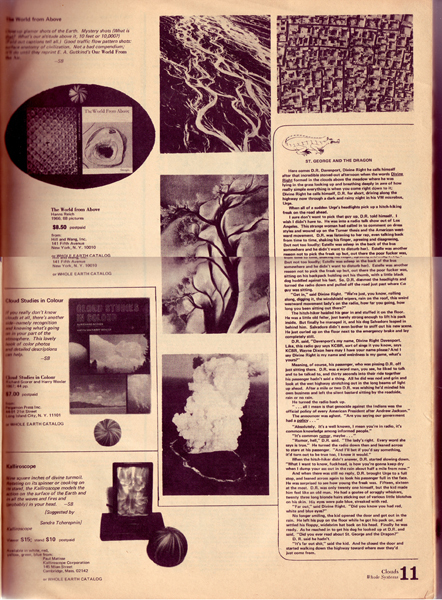
This (offset-litho/paper) catalog was the ‘World Wide Web’ of the late 1960s – a repository of content linked by the zeitgeist concerns of the counter-culture: ecology, environment, counter-culture, anti-war etc… contributions from hundreds of people, edited by Brand (later to write The Media Lab: Inventing the Future at MIT). The Catalog was a mail-order catalogue (note that the civilisation of the American West was based on mail-order catalogues, such as Sears Roebuck (from 1894). But it was a mail order catalog aimed at and created by a younger generation who were exploring a different curriculum – a counter-curriculum – to the conservative, capitalist, military-industrial world of the older generation. Typically the Whole Earth Catalog had sections on ‘Understanding Whole Systems’, Farming, Husbandry,Self-Suffiency, Shelter, Arts and Crafts, Surfing, Sailing, Music, Computing, Philosophy – in fact the whole gamut of areas of interest to the counter-culture. Brand was seminal in the San Francisco counter culture, and after WEC went on to found the first electronic community (the Whole Earth ‘Lectronic Link (WELL) in 1985 (8 years before the WWW really got going). Fred Turner has documented his life and work in From Counterculture to Cyberculture – Stewart Brand, the Whole Earth Network and the Rise of Digital Utopianism (2006).

Josef Svoboda: Diapolykran The Creation of the World Expo67

Josef Svoboda: Diapolykran The Creation of the World Expo67

Svoboda was a brilliant scenographic artist and stage designer. He founded the Laterna Magicka group and the Diapolyekran (multi-screen array) was invented for the Brussels World Fair of 1958, and had a major impact at the Canadian Expo67 in Montreal.
“Polyekran offers the possibility of free composition, a free shaping and creation on several screens. Images of real objects and people are projected, but the relationships among them are not realistic, but rather supra-realistic, perhaps surrealistic. Essentially, it’s the principle of abstract and pure collage, which is an old and basic technique of theatre. “Op art” is perhaps simply a more recent name for it. In any case, the contrast of varied things on stage is basic to theatre; the objects thereby acquire new relationships and significance, a new and different reality.”
In comparison with Polyekran, which is totally a film spectacle and technically a concern of film, Laterna Magika is theatre with living actors, singers, dancers, musicians. . . . On the one hand we used familiar scenographic techniques such as slides and film projection. New expressive possibilities were added by panoramic film and projection with multi-exposure on several screens at once. A second feature is the use of mobile screens that are joined to the performance of a live actor.
(Svoboda, quoted in “O svetelnem divadle,” Informacni Zpravy Scenograficke Laboratore (Sept. 1958), P. 5.)
http://monoskop.org/Josef_Svoboda

Robert Fuest: The Final Programme 1968

Robert Fuest: The Final Programme 1968

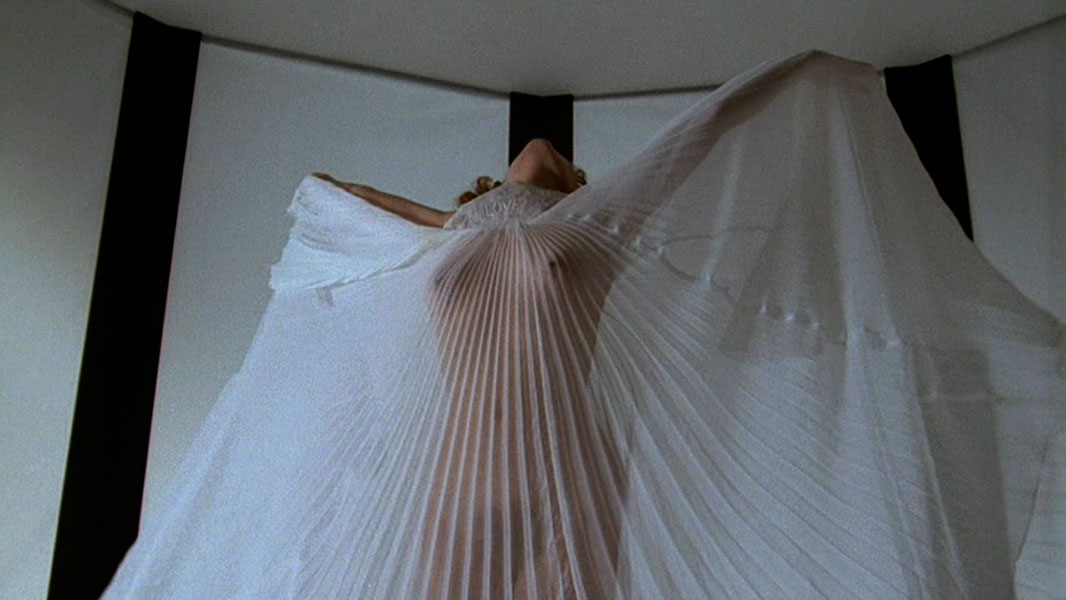
Of all the stylistically exaggerated Sixties movies (including Losey’s delicious Modesty Blaise) it is Robert Fuest’s The Final Programme that does it for me. Written by Michael Moorcock, Notting Hill Gate’s omnipresent sci-fi author and eccentric, it stars Jon Finch as Jerry Cornelius, Jenny Runacre as Miss Brunner, and a phenomenal cast of the best of British at that time. The film is an example of how the underground – the counter-culture in which Moorcock played a leading role – inspired mass entertainment. Other movies around this time that transmuted sci-fi and comic-book characters to the big screen included Vadim’s Barbarella, Losey’s Modesty Blaise, Michael Elliot’s The Year of the Sex Olympics and McGoohan’s The Prisoner (both for TV).

Art Speigelman: Maus – a Voyager Expanded Book on CDROM 1994

Art Speigelman: Maus - a Voyager Expanded Book on CDROM 1994

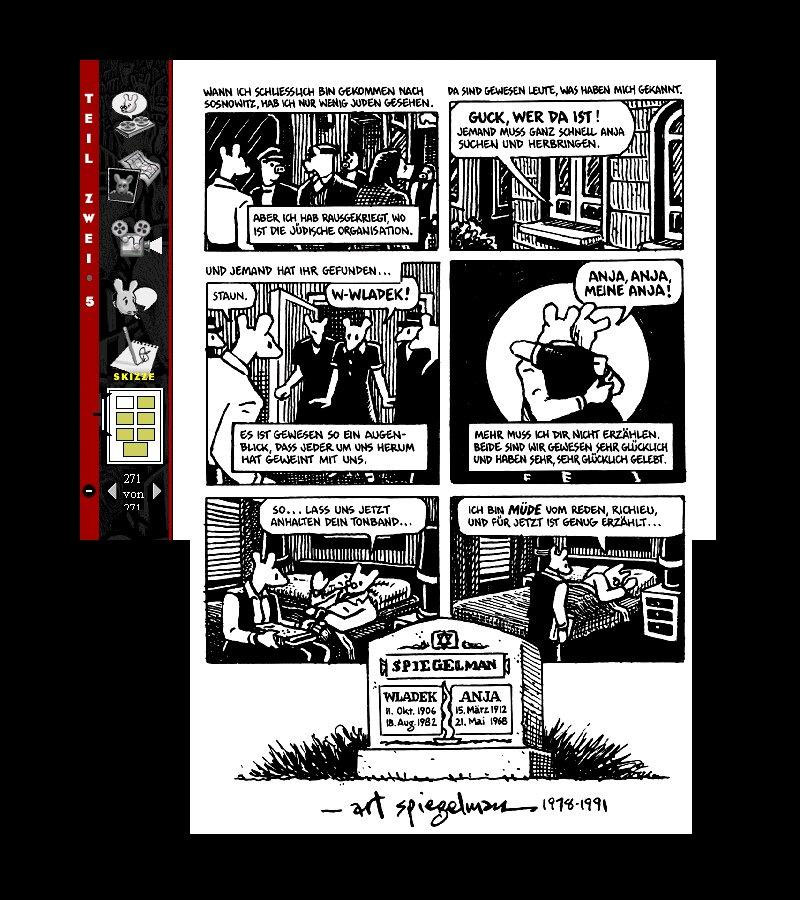
Twenty years before Scott McCloud’s brilliant insight into digital comics, Reinventing Comics, Bob and Aileen Stein’s The Voyager Company began to explore the territory of ‘interactive comics’ – migrating the page to the screen and using the hypermedia tool Hypercard to add features such as hyperlinked context, interviews, video, indicing, bookmarks and other features entirely new to the general public in 1994 – a couple of years before these became part of the expectation of the media experience after the Web. The best of the current ibook tools (such as Apple’s iBook Author) are only just starting to catch up (in form, and in content-design tools) with what the Voyager creative team did 20 years ago.

Peter Behrens: AEG corporate identity 1906

Peter Behrens: AEG corporate identity 1906

In 1906 the industrial designer Peter Behrens was asked to redesign the publicity material for AEG, the giant German electricity supplier – a major national combine incorporating power supply and electrical products. Behrens implemented what was probably the first ‘corporate identity’ programme – the implementation of standardised brand imagery throughout both the AEG product line and all its publicity.

Lotte Reiniger: The Adventures of Prince Achmed 1926

Lotte Reiniger: The Adventures of Prince Achmed 1926

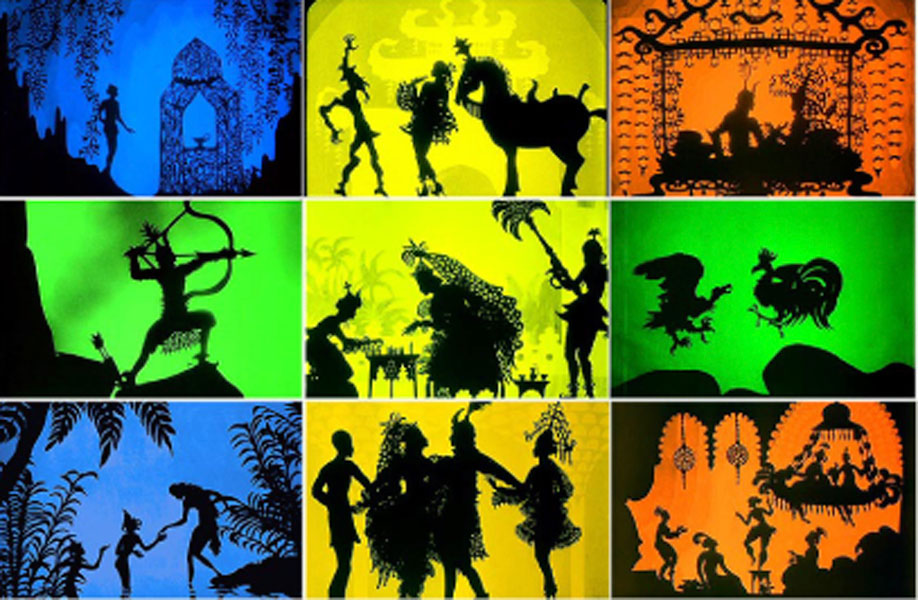
Lottie Reiniger developed her cut-out silhouette animation technique in 1919, and in partnership with her cinematographer and producer husband Carl Koch, from 1923 made one of the first feature-length animations: The Adventures of Prince Achmed, which still stands as a landmark in animation history. While clearly a development of 18th century silhouette portraiture and the 19th century cardboard children’s toy theatre shows, it is the astonishing handicraft of her animation technique, and her visual storytelling, that make her work very special.


Go back

Your message has been sent

Warning
Warning
Warning
Warning
Warning

Warning.