Richard Buckminster Fuller: Geoscope World Game 1961

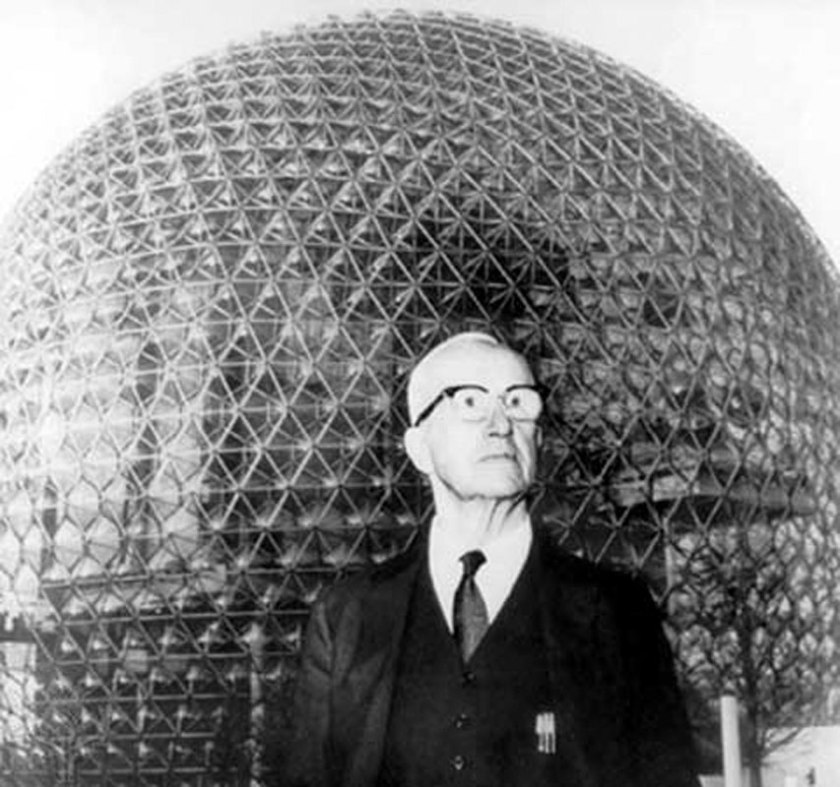
Richard Buckminster Fuller: Geoscope World Game

In the early 1960s, working with the English futurist John McHale and the architect Shoji Sadao, Fuller began work on his idea for a World Game with a geodesic Geoscope data-visualisation tool. The geoscope was a 200-foot sphere studded with light bulb-size ‘pixels’ that could display a variety of geo-political, geo-physical, and other data – the World’s resources, World population, pollution, de-forestation, etc. These would be the results of a World Game program – a simulation of the planet and its resources,  where design-scientists, engineers, – even politicians – could suggest policies for how to ‘“make the world work for 100% of humanity in the shortest possible time through spontaneous cooperation without ecological damage or disadvantage to anyone”. These grand ideas were reinforced by Fuller’s books: An Operating Manual for Spaceship Earth‘ and the World Resources Inventory, and by his descriptors: Spaceship Earth, Design-Science, Doing More with Less. Fuller’s idea was that geoscopes would be  suspended, using cables and pylons, over every major city on the planet – a constant reminder of our global responsibility – a way for factions to show how they would make the world work for everyone. This vision of a techno-utopia, governed by successful design-science strategies rather than mysticism and political factionalism, was hugely popular in my generation of architects, artists, designers, and ‘alternative-technologists’. His ideas and inventions were celebrated a few years ago in a major retrospective at the Whitney in New York. I was lucky to hear him speak at the new city centre in Milton Keynes in the late 1970s – he spoke for about 3 hours without notes, and captivated everyone. Then he applauded us!

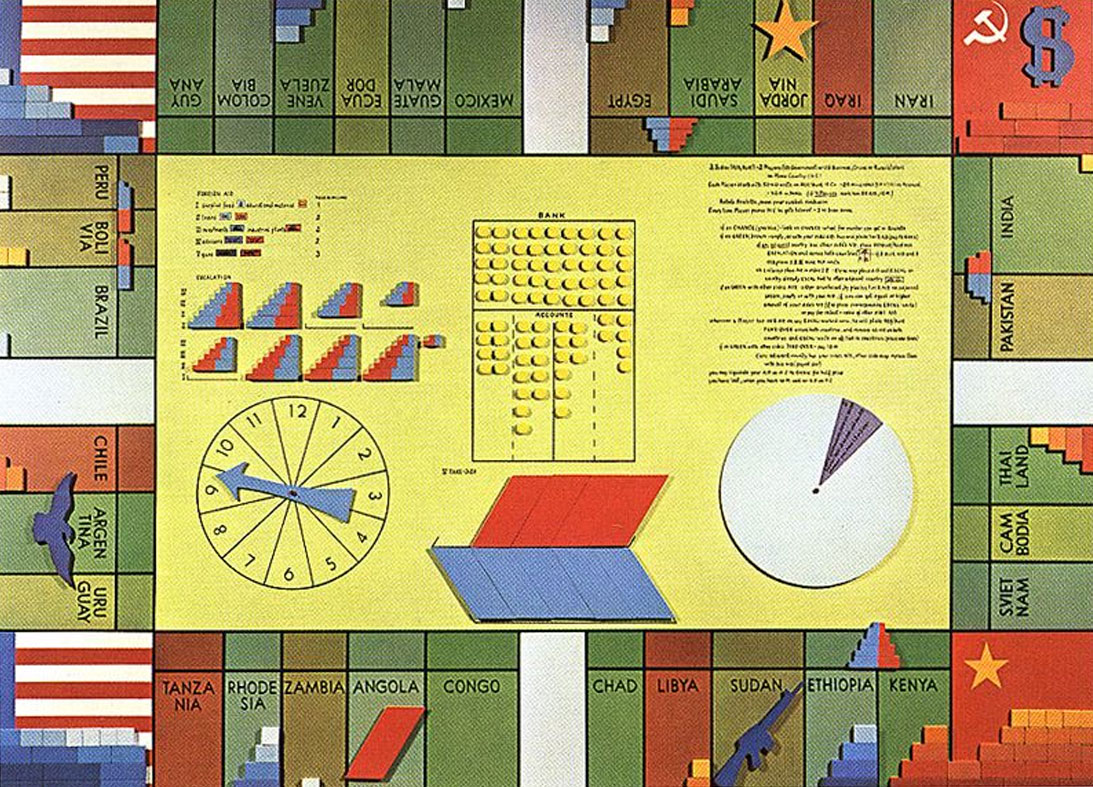
Oyvind Fahlstrom: World Politics Monopoly 1970

Oyvind Fahlstrom: World Politics Monopoly 1970

From the perspective of a neutral, the Swedish Fahlstrom brings a cool, incisive and avant garde eye to the Cold War – that ghastly period of the nuclear arms race, Mutually Assured Destruction (MAD), rabid anti-communism (etc) that dominated our youth in the 1960s. In the development of MAD, the think-tanks that built US cold-war policy (the RAND Corporation, the Hudson Institute) used von Neuman and Morgenstern’s Theory of Games to explore strategic decision-making. This philosophical investigation gave rise to concepts like zero-sum and non-zero sum games, the prisoner’s dilemma, and the idea of mutually assured destruction – a set of ideas satirised bleakly in Kubrick’s Dr Strangelove (1963). Here Fahlstrom takes the ever-popular Monopoly board game and casts it in the frightening equations of cold-war thinking. Fahlstrom was one the most important multi-media artists emerging in the 1960s. While in New York, he worked with Robert Rauschenberg and Billy Kluver in their Experiments in Art and Technology (EAT) events and happenings.

Robert Rauschenberg: Booster and Seven Studies 1970

Robert Rauschenberg: Booster and Seven Studies 1970

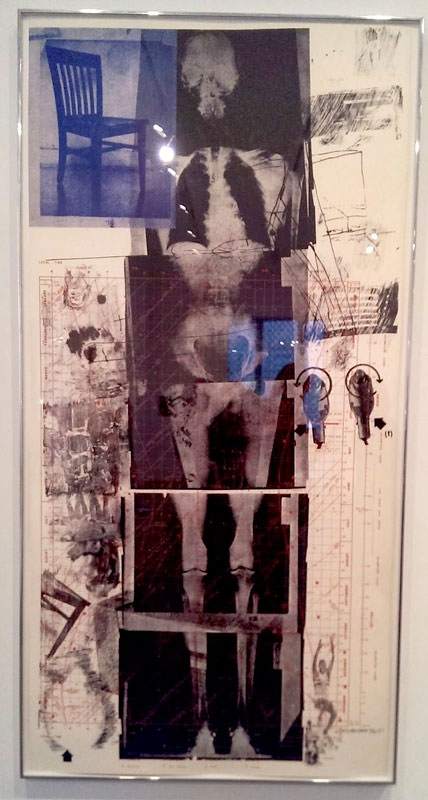
Rauschenberg has been a key transliterator of the zeitgeist since the early 1960s, maybe even before. I love his ‘expanded prints’ of the 1970s, especially this life-size self portrait in x-rays. Like April Greiman’s full-size body scan of 1987, Rauschenberg’s image is made of several individual images collaged together, with annotations, sketches and notes appended to the image. I remember seeing his set of illustrations/interpretations of Dante’s Inferno at the Tate (or was it the Whitechapel?) in the mid-1960s, and being bowled over by the poetry of his simple use of solvent to make rubbings from commercially printed magazine images.

Morton Heilig: Sensorama 1957

Morton Heilig: Sensorama 1957

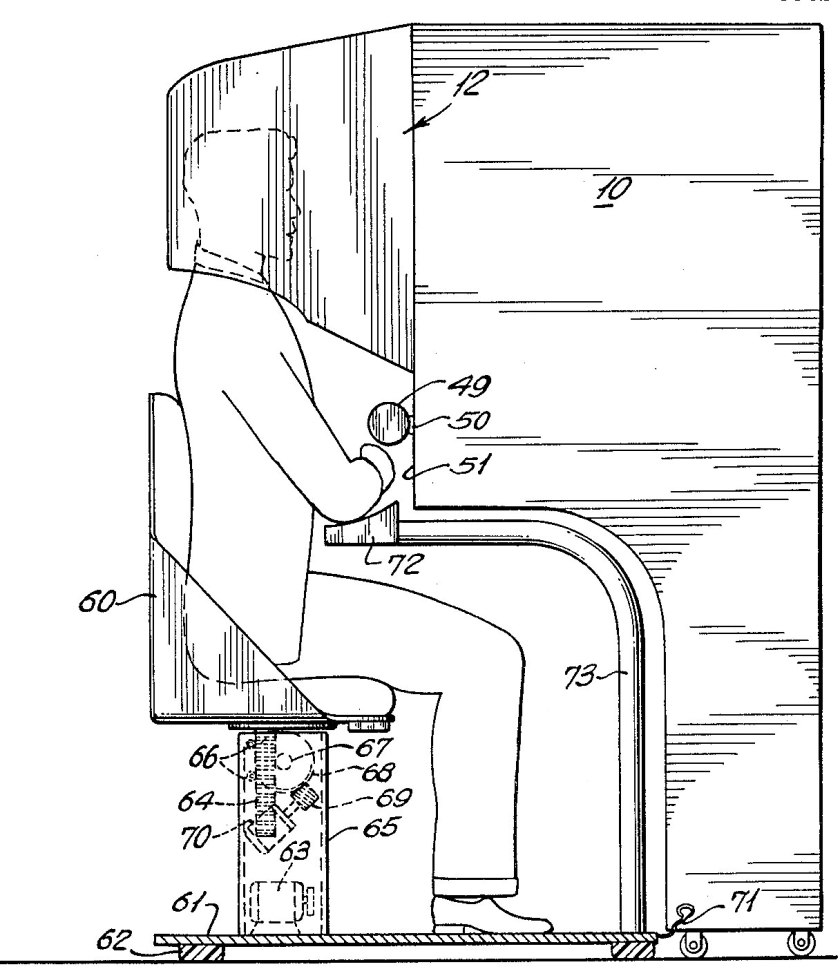
Heilig had a background in cinematographic projection. Impressed by Fred Waller’s work on Cinerama – a three-projector wide-screen cinema system  introduced in 1950, Heilig realised the potential of the immersive cinema experience. And he wanted to engage his audience sensorially – with senses beyond those of sight and sound. In 1957 he makes the Sensorama, and arcade-style entertainment. Sensorama was an electro-optical-mechanical motor-cycle-ride simulator. The user sat on – or in – the machine, looking at back-projected movie footage shot from a motor-cycle driving around New York. The user’s handlebar controls caused the film to speed up or slow down as the throttle was twisted, a fan accelerated air – with occasional whiffs of carbon monoxide – over the user. The sound effects were stereo – inside the hooded cowl of the simulator. The visuals were immersive, the seat shaking, the whiffs of Manhattan in the rushing air. This is really the most advanced simulator before virtual reality technology was made user-friendly in the early 1990s. Heilig was an important innovator in the artist’s perennial quest to engage an audience both multi-sensorially and immersively – a quest whose first signs – storytelling, dance and drama around the tribal fire – appeared perhaps in the neolithic, perhaps even earlier. The best description of Heilig’s work, and extensive interviews with him are in Howard Rheingold’s Virtual Reality (1991).

Beatles + BBC: Our World Global TV broadcast: All You Need is Love 1967

Beatles + BBC: Our World Global TV broadcast: All You Need is Love 1967

All You Need is Love  is a song written by John Lennon and credited to Lennon/McCartney. It was first performed by The Beatles on Our World, the first ever live global television link. Broadcast to 26 countries and watched by 350 million people, the programme was broadcast via satellite on June 25, 1967. The BBC had commissioned the Beatles to write a song for the UK’s contribution and this was the result. It is among the most famous songs performed by the group.”(wikipedia)

This was a phenomenal demonstration of the power of music and media. Watching the television that night (a 7-inch Sony Portable), you were straight away immersed in a vision of an emerging world-line where the counter culture interfaced directly with a global television audience. Other countries’ contributions seemed sadly tame and parochial compared with the most popular band in the world revealing their omni-spiritual song – it was a plea for peace (we were at the peak of the Vietnam War), a religious mantra, a pop song, and a direct message from stylish London. The on-stage audience in Abbey Road included Mick Jagger, Marianne Faithful, Donovan, plus a full orchestra, the whole managed as a live Happening, a la Al Hansen. It was epoch-making stuff – the counter culture live on-stage to a global audience. We got close to this vibe again  in 1985 with Bob Geldof’s Live-Aid, but this was the first!

Hans Prinzhorn: Artistry of the Mentally Ill 1922

Hans Prinzhorn: Artistry of the Mentally Ill 1922

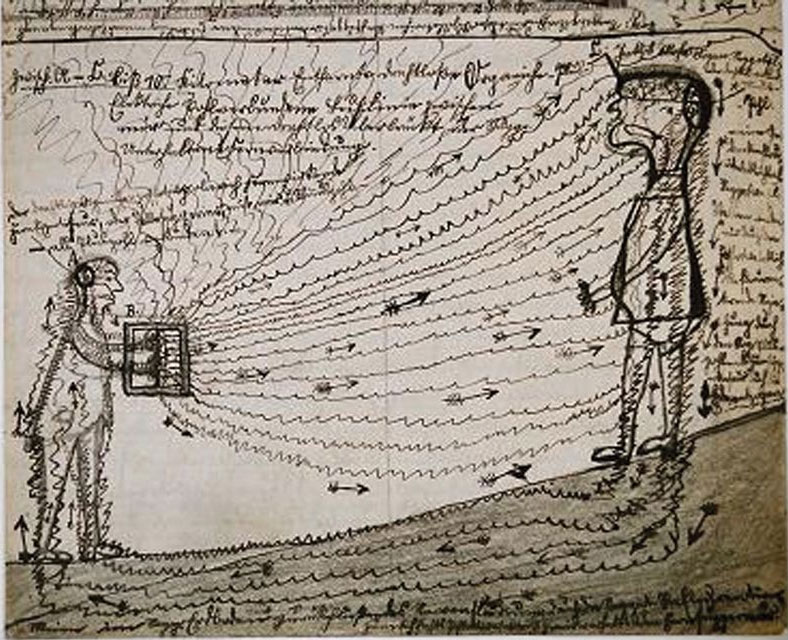
Hans Prinzhorn was a psychiatrist and art historian who had worked with Emil Kraepelin at the University of Heidleberg on a collection of art by mentally disturbed patients. By 1921, when Prinzhorn left Heidleberg, this collection had grown to include over 5000 works by about 350 patients. Prinzhorn’s 1922 book Artistry of the Mentally Ill (profusely illustrated with images from the Heidelberg collection), was the first attempt to analyse this type of art, that subsequently became known as ‘Outsider Art’. Prinzhorn was interested in the borderline between psychiatry and art, mental illness and self-expression, and his work became very influential among artists, especially the Expressionists and Surrealists, with their interest in self expression and in visualising the working of the unconscious mind.

As most serious artists and designers are interested in the act of perception and cognition – the way we transmute the visual and other sensual input from the outside world into mental images – and how we then illustrate these images and evoke them with works of art, Prinzhorn’s book stands out as the first major study to analyse these issues. Of course we know much more now of the workings of the brain, and have begun to develop coherent theories of the Mind (see for example Marvin Minsky’s Society of Mind, and Daniel Dennet’s Consciousness Explained), but the issues addressed by Prinzhorn are still central to these developments. ‘Outsider Art’ is the label now used to describe the art of the mentally ill, the ‘naive’ work of untrained ‘folk artists’, the work of so-called primitive tribes and other similar artefacts, and remains a source of inspiration for artists, nor merely in the radically unconventional images that are produced by ‘outsiders’ but as evidence of these process of perception, cognition and expression that are central to all our experiences of art and design.

Other good books on this subject: Steven Rose: From Brains to Consciousness, Igor Aleksander: How to Build a Mind, and Margaret Boden: The Creative Mind.

Max Ernst + Paul Eluard: Les Malheurs des Immortelles 1922

Max Ernst + Paul Eluard: Les Malheurs des Immortelles 1922

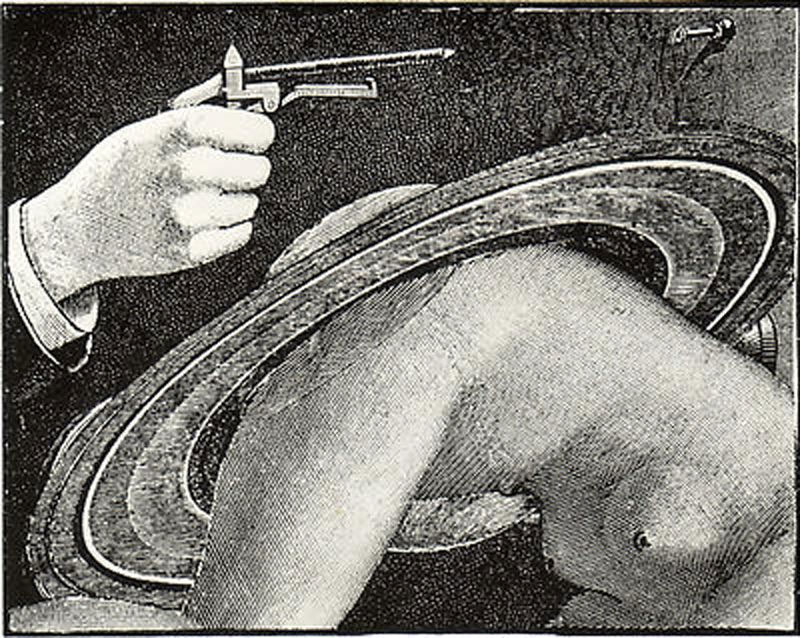
This was the first of Max Ernst’s themed sets of collages, preceding Une Semaine des Bonte, and La Femme Cent Tetes (both 1929). Les Malheurs was produced as a set of illustrations for Paul Eluard’s poem. This range of narrative collages, cut-ups from the vast store of Victorian magazine engravings that Ernst had access to at that time, are brilliant examples of the art of surrealist collage. The line (rather than tone) nature of the source engravings, make it easier to achieve high-quality ‘seamless’ collages, but that does not mitigate against the genius of Ernst’s vision.
U. M. Schneede has commented:
“Disparate elements are here brought together in a less complex and more acute form. The man-beast hybrid makes its appearence and transforms an idyllic interior into a demonic stage-set … The twin starting-points of Max Ernst’s expressive impulse are a search for appropriate avenues for working out in visual terms the private obsessions of his childhood, and also his understanding of the Freudian analysis of such obsessions. His relationship with an authoritarian father, the pressures of middle-class family life, are psychoanalytically interpreted …”
(Uwe M. Schneede 1973)

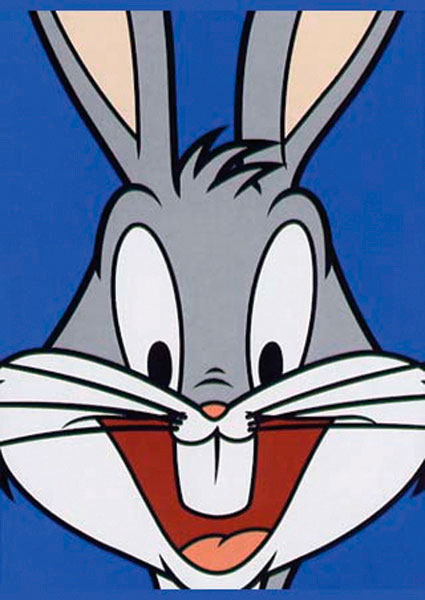
Tex Avery, Chuck Jones, Ben Hardaway: Bugs Bunny 1940

Tex Avery, Chuck Jones, Ben Hardaway: Bugs Bunny 1940

This fabulously anarchic cartoon character, invented by a team of outstanding artists through 1939-1940, has become a cult favourite of the counter-culture in the US, famously appearing in Robert Anton Wilson’s fantasy conspiracy-theory Illuminatus. Wilson points out that “Although few people remember this, Bugs Bunny was the first UFO “abductee” in a 1952 cartoon called “Hasty Hare.” A masterpiece of cartoon art, Bug’s character development, his manic enthusiasms and hilarious cynicism appealed to the love of chaos and subversion – attributes of the mythical Trickster – in all of us..
http://www.youtube.com/watch?v=2VHf7rB4DPU

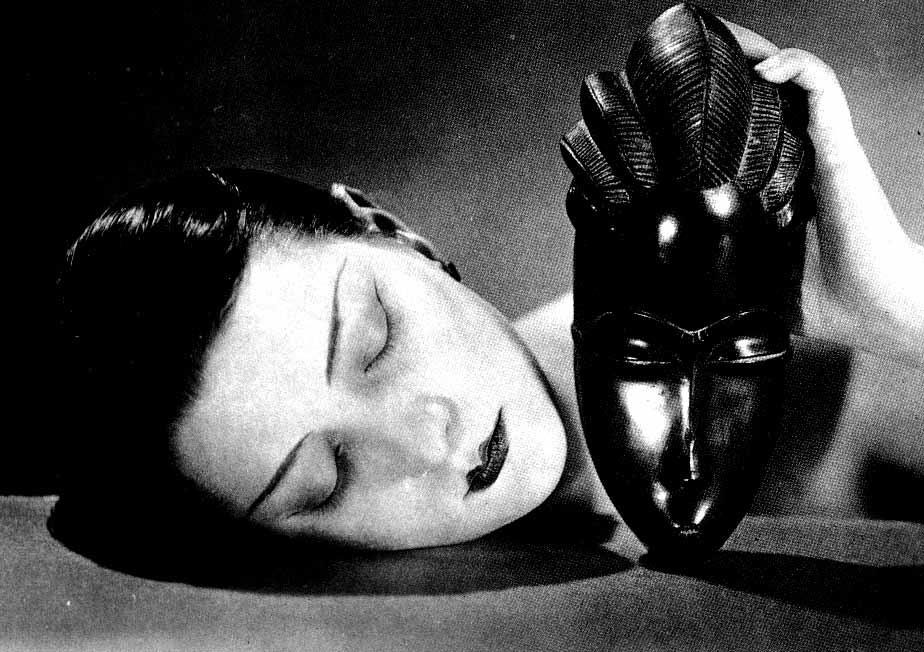
Man Ray: Noir et Blanche 1926

Man Ray: Noir et Blanche 1926

With an art school training and a background in advertising and drafting, Man Ray learned of the European avant garde in New York from 1911, making friends with Duchamp, and visiting the Alfred Steiglitz Gallery, making collages and holding one-man shows of his work. He followed Duchamp to Europe in 1921, and quickly became a leading member of the Surrealists, while working as a fashion photographer for Paul Poiret. He exhibited work in the first Surrealist Exhibition in 1925, and during the 1920s and 1930s photographed many of the leading Parisian artists. During this time he experimented with photograms (direct-exposure photoprints) he called Ray-o-Graphs. In 1926 he produced a series of photographs of Kiki de Montparnasse (star of Leger’s Ballet Mecanique, and Man Ray’s lover), several of which feature the African mask in poetic contrast.

Why does this inspire?
It is in his portraits of the great beauties of the time (including Nancy Cunard, Marie-Laure de Noailles, Kiki de Montparnasse, Helen Tamiris, Berenice Abbott,Lee Miller, Dora Maar and many others) that, more than his portraits of artists, writers and philosophers, capture not just the physiognomy but the zeitgeist (the expression of the essence of the moment) as well. In a period and in an art movement dominated by ideas of the Unconscious, and primitive Ritual, and Art as Magic, the African mask signifies the Primitive for the Surrealist avant garde, and the image of Kiki juxtaposed with the Mask synthesises these ideas – Salon beauty and Primitivism, equally stylised faces…

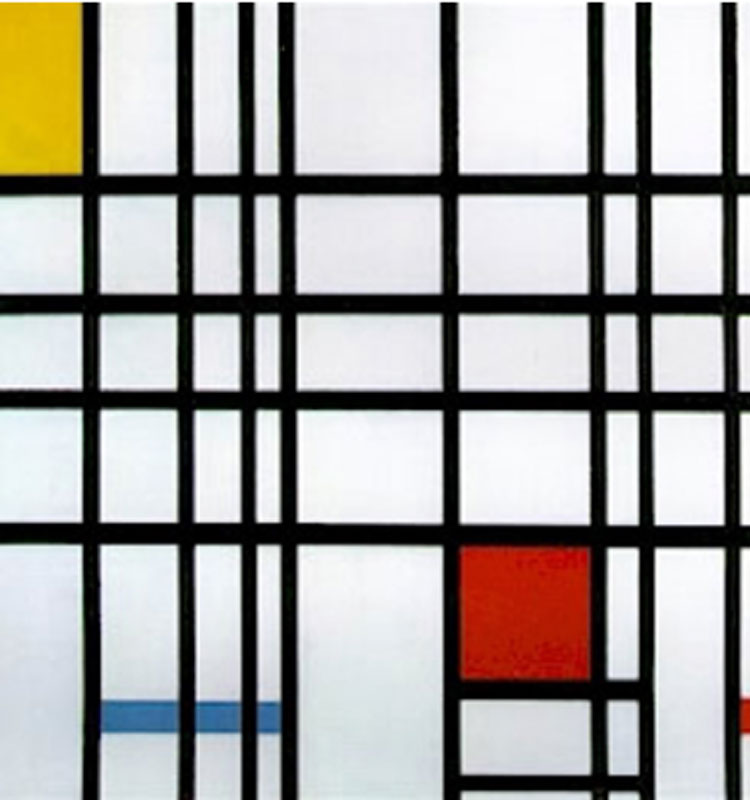
Piet Mondrian: Composition 1921

Piet Mondrian: Composition 1921

Piet Mondrian was a Dutch painter and member of the De Stijl group (with Bart van der Leck, Gerrit Reitveldt Theo van Doesburg and JJP Oud). His rigorous abstraction and his meditational explorations of the space of the rectangle give him a unique place in 20th Century Art. A follower of the Theosophist Helena Blavatsky, Mondrian spent much of his life searching for the Spiritual harmony that she suggested could be found by non-empirical means…Why does this inspire?
I love how Mondrian’s cool Zen-like (actually Theosophist-like) meditations on the space of the rectangle (and occasionally the diamond) are seemingly simple, yet always intriguing, always harmonius – as if he has found some other Golden Section of harmony..and he’s saying ‘Here it is. It’s that simple.” and I still look and think, letting his subtle rhythms and intervals gradually resonate with my own. These are just fabulous koans – art-poems simplified-down, reduced-down, compressed to their essence, records of his Spiritual quest.

Mondrain said: “The position of the artist is humble. He is essentially a channel.”

He also said:
‘Nature (or what I see) inspires me, gives me, as it does virtually every painter, the emotion from which the urge derives to create something. But I want to approach truth as closely as possible, and thus I abstract everything until I come to the essence (always the external essence!) of things.’